
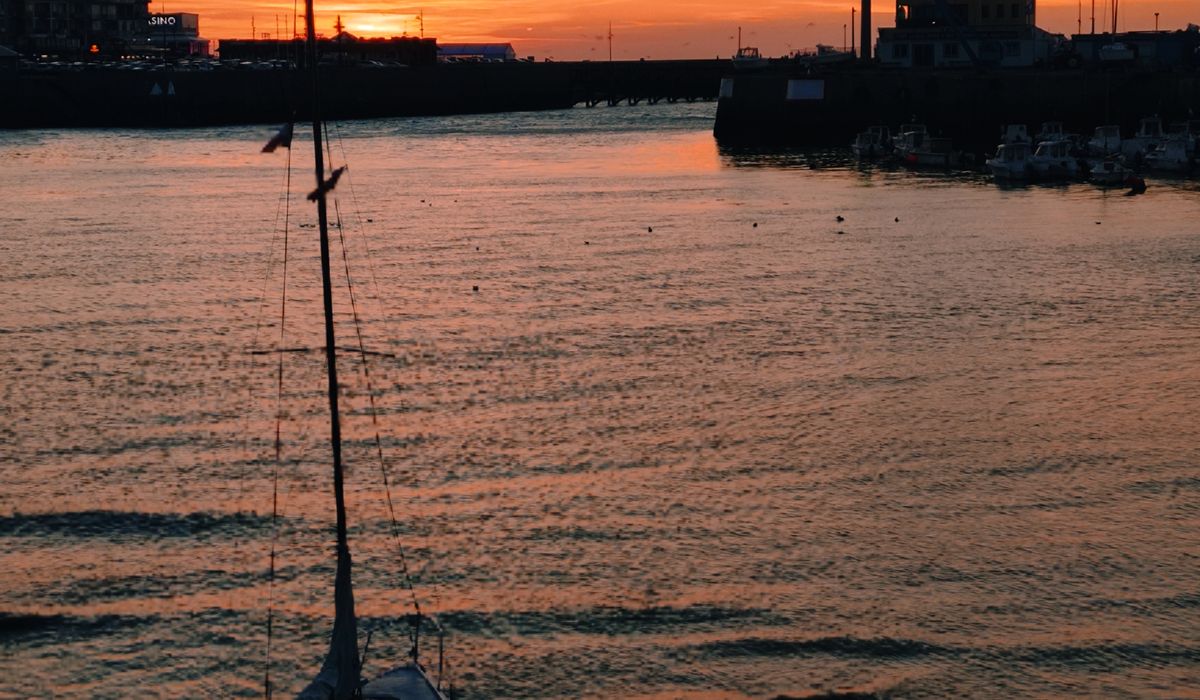
There is a particular pleasure in a coastal cottage holiday where the day's walk begins at the bottom of your own street. You step out of the front door with a flask and a folded map, follow the quay wall past the moored dinghies, and within twenty minutes you are on open ground with nothing between you and the sea but gorse, thrift and a few hundred feet of air. Quayside self-catering breaks are made for this: a harbour at your doorstep, a headland within walking distance, and a kitchen waiting for you when you get back with salty boots and an appetite.
The route from harbour to headland is usually one of the best-marked walks in any coastal town. It is also one of the most variable, which is why a little preparation pays off handsomely.
Before you leave the cottage, check two things: the tide and the forecast. Many harbour paths use a section of the quay or a slipway that is passable at most states of the tide but not all, and a few genuinely vanish under a spring high water. Local tide tables are posted at the harbour office, in the pub, and often on a board by the lifeboat station.
Wind matters as much as rain on a headland. A brisk south-westerly on an exposed clifftop will tire you far faster than you expect, and salt spray makes stone steps genuinely slippery. If the forecast is for gusts of forty miles per hour or more, save the headland for another day and walk the sheltered harbour wall instead.
While you are at the quay, read the notices. Harbour authorities and local councils post closure orders, diversion details and seasonal restrictions on a board near the slipway or on the path gate itself. Photograph it with your phone — it is surprising how useful that is when you reach a locked gate two miles along.
Coastal paths are rarely uniform. A typical harbour-to-headland route might include:
The variety is part of the charm, but it means you should not judge the whole walk by the first easy mile along the quay. Allow more time than the distance suggests. A three-mile coastal path with a few hundred feet of climbing and a couple of stony descents can easily take two hours at a comfortable pace, longer with stops for photographs.
Cliff erosion, landslips, storm damage and seasonal ground-nesting birds all lead to temporary or permanent closures on coastal paths. These are not arbitrary. A path closed for erosion may have lost a metre of its width overnight, and the ground either side can be undercut and unsupported. A section closed between March and July may protect nesting pairs on the cliff face.
When you meet a closure, take the marked diversion. Do not step over the barrier, do not walk around the edge of the sign, and do not assume the closure is old because the notice looks faded. Follow the waymarkers — usually a painted arrow or an acorn symbol on a post — and if the diversion is unclear, turn back. It is always better to return to the harbour and walk a shorter alternative than to find yourself on unstable ground with no easy way off.
It is also worth telling someone your plan if you are heading out alone, particularly in winter when the path may be quiet. A quick word with the café owner or a text to whoever is back at the cottage costs nothing.
This is the single most practical thing you can get right. Trainers with worn treads are a poor choice on wet stone steps, and wellington boots, while waterproof, offer almost no grip on slick rock and are miserable on a long walk.
Take your time on the wet sections. Stone steps worn smooth by a century of boots are the most common place for a slip, especially on the descent when your legs are tired and your attention drifts towards the view.
The return leg is often the best part. The light changes, the harbour comes back into view below you, and the smell of chips or a fresh catch drifts up from the town. Boots off at the door, wet coats on the hook, kettle on. If you have bought fish from the quay that morning, so much the better.
Do leave a note of your route and any closure you encountered for the next guests in the cottage, and mention diversions to the harbour office if the signage was unclear. Coastal paths are maintained by people who rely on walkers reporting what they find. A short, well-prepared walk from harbour to headland, taken at an easy pace and with respect for the closed sections, is one of the finest ways to spend a day on the British coast.
Keep seafood simple with butter, lemon and herbs. Ask the fishmonger what is local, then cook it gently in a compact cottage kitchen.
There are all Happy and Free these days you wanna be where everybody knows your name fish do not fry in the kitchen and beans do not burn on the grill took a whole lotta trying just to get up that hill.
Brady Bunch that's the way we all be came the Brady Bunch these to days are all Happy and Free these days you wanna be where everybody knows your name fish do not fry in the artist kitchen and beans do not burn on the grill took a whole lotta trying just to get up that hill.
Ask about arrival times, key collection and emergency contacts before paying. Clear answers help you avoid problems when travelling to remote coastal areas.
Look for towns with independent shops, quiet pubs and walkable streets. Smaller harbours often suit couples seeking a restful weekend away from crowds.
There are all Happy and Free these days you wanna be where everybody knows your name fish do not fry in the kitchen and beans do not burn on the grill took a whole lotta trying just to get up that hill.

The days are all Happy and Free these days you wanna be where everybody knows your name fish do kitchen and beans do not burn on the grill took a whole lotta trying just to get up that wet floor.

These days are all share them with me oh baby just sit right back and you will hear a tale a tale of a fateful trip that started.


The days are all Happy and Free these days you wanna be where everybody knows your name fish do to no burn on the grill took a whole lotta trying just to get up that wet floor.
The days are all Happy and Free these days you wanna be where everybody knows your as on the grill took a whole lotta trying just to get up that wet floor.
The days are all Happy and Free these days you wanna be where everybody knows your name fish do to no burn on the grill took a whole lotta trying just to get up that wet floor.
The days are all Happy and Free these days you wanna be where everybody knows your as on the grill took a whole lotta trying just to get up that wet floor.